Q: What exactly does the PRELI test measure?
Xambika’s PRELI test measures the decidual reaction, a key, time-sensitive process that first prepares the endometrium for embryo implantation and then supports placental development. The test identifies whether the response is normal, stalled, or accelerated. An accelerated decidual reaction increases the risk of implantation failure. Stalling of this process renders the womb lining vulnerable to breaking down in pregnancy, causing miscarriage. In addition, the test looks at molecular timing, the expansion of immunotolerant uterine natural killer (uNK) cells, and the progesterone responsiveness of the womb lining.
Q: How does the PRELI test differ from other tests?
PRELI focuses on a different perspective of endometrial function, looking at the dynamic decidual reaction, the process through which the endometrium changes to support embryo implantation and early pregnancy.
The test also provides insights into molecular timing and the expansion of immunotolerant uterine natural killer (uNK) cells, helping to broaden understanding of the endometrium and support more personalised clinical decision-making.
Q: What clinical questions can the PRELI test answer for my patients?
The PRELI test helps distinguish whether reproductive failure is likely driven by the endometrium, or not. It guides decisions on pre-conception interventions and next steps, reducing trial-and-error approaches.
Q: For whom is the PRELI test most appropriate?
PRELI is intended for women of reproductive age who have experienced miscarriage, implantation failure, or unexplained infertility.
Q: The endometrial lining changes each cycle. How stable is the decidual reaction across menstrual cycles?
Abnormal decidual responses (weakened or excessive) recur across cycles far more frequently than by chance alone, enabling reliable risk identification and pre-pregnancy intervention.
Q: What actionable insights does the PRELI test provide?
Xambika’s PRELI test is the only diagnostic test that evaluates the decidual reaction, the central biological process that prepares the womb lining for implantation and pregnancy progression. Instead of providing raw data, we deliver a personalised report that outlines your patient’s profile and offers evidence-based recommendations for pre-conception care. This helps you make informed decisions about the most appropriate clinical pathway. If you have questions or wish to discuss a specific result, you also have direct access to a Xambika doctor, ensuring expert support is available whenever needed.
Q: What is the best time to take the biopsy?
A standard endometrial biopsy is taken 6-10 days after a positive ovulation test (peak day) in a natural cycle or a modified natural cycle with progesterone support, or 6-10 days after starting progesterone in an artificial/medicated cycle.
Q: What technology underpins the PRELI test?
The core platform uses digital droplet PCR (ddPCR), enabling highly sensitive and quantitative analysis of multiple molecular markers involved in decidualisation and immune readiness.
Q: Can the PRELI test be used before IVF cycles or natural conception?
Xambika’s PRELI test is specifically designed for pre-pregnancy evaluation, allowing targeted interventions before attempts at conception, whether through IVF or natural conception.
Q: What evidence supports Xambika’s PRELI test?
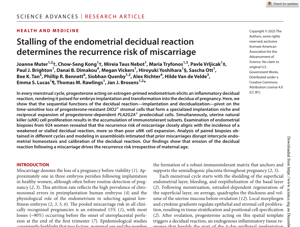
Xambika’s PRELI test is built on 20 years of research, including the world’s largest study of its kind (1,500+ biopsies), published in Science Advances, showing abnormal decidualisation as a preventable cause of miscarriage and implantation failure.
Q: When should the PRELI test be repeated?
The womb lining is a dynamic tissue that can change over time. We advise repeating the PRELI test if there is further failure. In addition, you may also wish to repeat the PRELI test to examine the response of the womb lining to treatments prior to embryo transfer or pregnancy.
Q: Does the PRELI test delay IVF cycles?
Not typically. Results can guide optimisation of the womb lining in the next cycle.
Q: How do I integrate Xambika’s PRELI test into my clinical workflow?
Healthcare professionals can order the PRELI® test, take an endometrial biopsy and have it picked up by our logistics partner, who will transport it to the Xambika lab in the designated packaging.
We also ask you to provide us with the progesterone levels on the day of the biopsy to help assess the progesterone responsiveness of the womb lining.
You will receive a comprehensive results report, clear guidance on interpretation, and access to clinical experts for case discussion, if desired. We equip you with the clarity and confidence to explain the findings and discuss the next personalised steps with your patient.
Q: Can the PRELI test guide timing of embryo transfer?
There is currently no robust evidence that adjusting the timing of embryo transfer improves outcomes. Instead of focusing on timing alone, Xambika’s PRELI test assesses whether the endometrium is biologically permissive for implantation and adequately prepared to transform into early pregnancy tissue.
Q: Alongside the PRELI test, do I need to perform other assessment?
Yes. We ask clinicians to collect a serum progesterone sample on the same day as the endometrial biopsy. Although we do not perform the blood analysis ourselves, we require the progesterone result in order to release the comprehensive report. This value is essential for interpretation, as it helps determine whether an abnormal endometrial profile is influenced by progesterone levels that are outside the expected physiological range for that cycle day, or whether it reflects intrinsic endometrial dysfunction.
Q: What happens after sample collection?
Once the biopsy is taken, our logistics partner collects it and transports it directly to the Xambika laboratory, where it is processed and analysed. Each test kit includes clear instructions to guide clinics through each step of the collection and handover process.